
Ann Arbor’s voters will cast ballots this year to determine who will control the levers of power and define the city’s approach to issues such as affordable housing, environmental stewardship, economic development, and even immigration enforcement.
In the overwhelmingly Democratic city, the primary elections usually settle the matter. (In 2024, Ann Arbor overwhelmingly voted against Proposal C, which would have eliminated August primaries and removed party affiliations from the general election ballot. The last time a Republican served on city council was in 2005.) Partisan candidates will appear on the August 4 primary ballot; Independents will appear on the November 3 ballot, and have until July 16 to file a candidate petition.
Incumbent Mayor Christopher Taylor faces opposition from two challengers, most notably Washtenaw County Commissioner Yousef Rabhi. Half of the council’s ten seats are up for election in this cycle. In Wards 1 and 5, incumbents Cynthia Harrison and Jenn Cornell are running against two challengers each. In Wards 2, 3, and 4, the candidates are running for open seats.
Voters may also see millage questions depending on where they live. The Ann Arbor Public Schools building and site sinking millage, last approved in 2017, is up for renewal.
The Observer reached out to everyone who filed a candidate petition for the mayoral or council elections to hear their views. A couple of them did not respond. Here’s what the others shared with us:
Mayor
Courtesy of taylorforannarbor.com
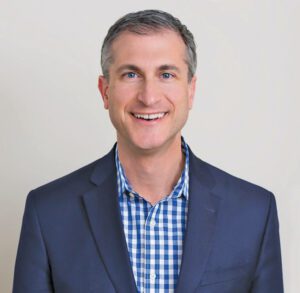
Christopher Taylor (Incumbent; Democrat)
Taylor, an attorney at Hooper Hathaway, is decidedly the establishment Democrat, seeking reelection for his fourth and, according to him, final term. He’s a champion of the Comprehensive Land Use Plan (CLUP), and his track record also includes sponsoring a 2017 resolution stating that the city would refuse to cooperate with ICE (the resolution was expanded earlier this year), helping to launch the A2Zero carbon neutrality plan in 2019, supporting the 2020 affordable housing millage, leading the effort for the 2022 community climate action millage, heading up the creation of the Sustainable Energy Utility (SEU) in 2024, and in 2026, working toward the sale of the Library Lane parcel to the Ann Arbor District Library. On May 13, Taylor announced in a press release that he would oppose new city millages.
Because of the Affordable Housing Millage, he writes in an email to the Observer, “We have more than 1,200 units of new, permanent affordable housing in the pipeline, with more on the way. This will more than double the amount of affordable housing in Ann Arbor in just about 5 years.” He adds that “we are working to allow more housing at all income levels, including duplexes and triplexes. We have vibrant neighborhoods and we’re making certain that any new homes will fit into existing streetscapes. Finally, we have protected tenants from predatory landlords, doing away with rental junk fees, requiring fee transparency, and increasing annual rental unit inspections to more than 6,000 per year.”
Read Christopher Taylor’s full interview here.
Endorsements: City Councilmembers Dharma Akmon, Erica Briggs, Jenn Cornell, Lisa Disch, Ayesha Ghazi Edwin, Jen Eyer, Cynthia Harrison, Jon Mallek, and Chris Watson; Washtenaw County Commissioners Andy LaBarre, Jason Maciejewski, Caroline Sanders, Katie Scott; State Representatives Jennifer Conlin, Jason Morgan, and Carrie Rheingans; Mayor Pro Tem Travis Radina; Ann Arbor Democratic Party chair Mary Hall-Thiam; AADL board president Aidan Sova; Democratic Municipal Officials; Laborers’ Local 499; Ironworkers Local 25; Sheet Metal Workers’ Local 80. More endorsements here.
Courtesy of washtenaw.org
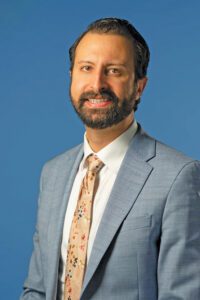
Yousef Rabhi (Challenger; Democratic Socialist)
Rabhi, a Washtenaw County commissioner and former Michigan House of Representatives Democratic floor leader, is challenging Taylor on a Democratic Socialist platform, decrying what he describes as Ann Arbor’s current trajectory of becoming “a country club town.”
His game plan to address housing affordability is to expand the Housing Commission and invest in publicly owned, permanently affordable housing, including community land trusts and cooperative housing associations. He says he’s ideologically opposed to the privatization of public services—citing the examples of the city contracting out commercial garbage collection, tree pruning, and compost services—as well as the sale of city assets to for-profit entities. Of the current administration’s pro-development stance, he says, “They spent millions of dollars to hire out-of-town consultants, and we have over 100,000 consultants in our own community: it’s our residents who know how this community operates.”
Rabhi also aims to be more confrontational with the Trump administration. “We are living in a time not just of a fascist president that is bearing down on our community, but a rising oligarchy of wealthy billionaires that are accumulating more and more wealth and resources,” he says. “We need a mayor who is willing to not just say that we are opposing the Trump administration, but to take actions that may put us in an uncomfortable position, that may require us to go to court and spend public resources to defend those decisions from the Trump administration.” He was part of the anti-ICE policy that prompted the White House to sue Washtenaw County in April.
Read Yousef Rabhi’s full interview here.
Endorsements: Sheriff Alyshia Dyer; Ann Arbor Indivisible; Ann Arbor Tenants Union; Graduate Employees’ Organization; Huron Valley Area Labor Federation; Huron Valley Democratic Socialists of America; International Brotherhood of Teamsters Local 243; Michigan Democratic Party Progressive Caucus.
Carlos Fiorello Gordish (Challenger; Democrat)
Gordish did not respond to interview requests. He has no campaign website, and while his social media profiles say he is a mayoral candidate, they contain no information about his platform.
WARD 1
Courtesy of Cynthia Harrison
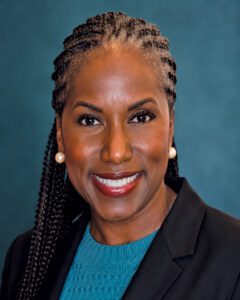
Cynthia Harrison (Incumbent; Democrat)
Harrison’s reelection bid has a focus on housing affordability, equity and accessibility, and reliable city services. She emphasizes her experience and her track record of voting for more housing options, as well as “confronting exclusionary zoning practices that have historically limited who gets to live here.” Harrison, who serves as director of innovation for the Washtenaw County Sheriff’s Office, has worked on introducing equitable policies in the public safety and justice system. “My work has been centered on making sure working families and historically underrepresented residents are not an afterthought in city decisions,” she writes in an email to the Observer.
Read Cynthia Harrison’s full interview here.
Endorsements: Mayor Christopher Taylor; City Councilmembers Dharma Akmon, Erica Briggs, Jenn Cornell, Lisa Disch, Ayesha Ghazi Edwin, Jenn Eyer, Jon Mallek, Travis Radina, and Chris Watson; Sheriff Alyshia Dyer; Washtenaw County Commissioner Andy LaBarre; State Senators Jeff Irwin and Sue Shink; State Representatives Jennifer Conlin, Jason Morgan, Carrie Rheingans, and Jimmie Wilson Jr.; Former State Representative Felicia Brabec. More endorsements here.
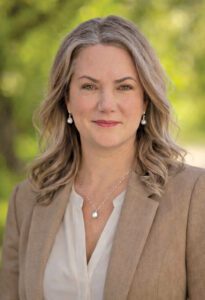
Courtesy of Rebecca Arends
Rebecca Arends (Challenger; Democrat)
Arends’s campaign emphasizes better stewardship of public spaces, transparent use of tax dollars, and a more responsive city council. She says her goal as a council member would be to reduce wasteful spending and more effectively represent Ward 1 residents who feel unheard. “I believe local government should be focused on making decisions that address the community’s day-to-day concerns,” Arends writes. Rather than seeking endorsements or campaign donations, Arends says she has focused on door-to-door conversations with residents and documenting their concerns on her website. Arends is a licensed social worker who owns a private therapy practice and works part-time at Michigan Medicine.
Read Rebecca Arends’s full interview here.
Related: Rebecca Arends (Oct. 2015)
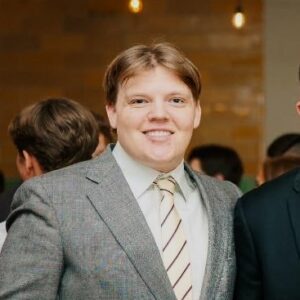
Courtesy of Lucas King-Cochran
Lucas King-Cochran (Challenger; Independent Democratic Socialist)
“I’m not a career politician; I’m someone who’s watched friends priced out of the city they grew up loving, watched neighbors choose between rent and groceries, and decided to do something about it instead of waiting on someone else,” emails King-Cochran, who is earning his MPA at EMU while working at Bivouac. He pledges to expand city-supported affordable housing—“that means using the affordable housing millage aggressively, exploring community land trust and co-op models that take homes off the speculative market permanently, and strengthening inclusionary requirements.” He supports the SEU and Ann Arbor for Public Power, a Tenants Bill of Rights, as well as “participatory budgeting so residents have a direct say in how city dollars get spent,” and “real transparency around the deals our city makes with developers and contractors.”
Read Lucas King-Cochran’s full interview here.
WARD 2
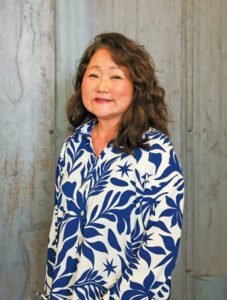
Reese Johnson
Sandy Aldrich (Democrat)
“Many neighbors feel like the city treats planning as a ‘check-the-box’ exercise rather than a true partnership,” emails Aldritch is a self-employed business, marketing, and leadership consultant. A proponent of what she describes as “mindful growth,” Aldrich says she supports “adding a diversity of housing types to support the ‘missing middle’ for teachers and young professionals while keeping our neighborhoods’ visual character intact,” and managing growth so it doesn’t stress water, sewer, and power systems.
Read Sandy Aldrich’s full interview here.
Endorsements: Mayor Christopher Taylor; City Councilmembers Erica Briggs, Jenn Cornell, Lisa Disch, Ayesha Ghazi Edwin, Jen Eyer, Cynthia Harrison, Jon Mallek, and Travis Radina; State Representative Jennifer Conlin. More endorsements here.
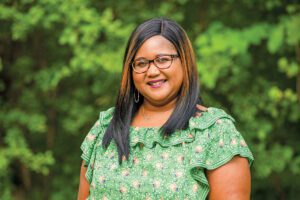
Doug Coombe
Teesha Montague (Democrat)
Housing affordability, inclusive economic and planning approaches, and improving public safety and community trust are what’s motivating Montague, a community service officer with the Washtenaw County Sheriff’s Office. “On housing, that means pushing for mixed-income development, stronger affordability requirements, protecting legacy homeowners from being taxed out, and expanding realistic pathways to homeownership,” she emails the Observer. “On public safety, it means improving communication between residents and city leadership, supporting violence prevention and youth engagement programs, and making sure our first responders and community-based supports work together effectively. On economic inclusion, it means prioritizing workforce development, supporting local entrepreneurs, protecting small businesses, and making sure city investments benefit longtime residents as well as newcomers.”
Read Teesha Montague’s full interview here.
WARD 3
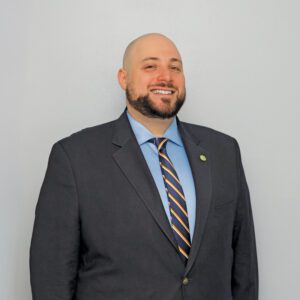
Courtesy of Ryan Bartholomew
Ryan Bartholomew (Democratic Socialist)
As housing and child care costs soar, Bartholomew is running to make them more affordable. He plans to advocate for increased renter protection regulations and emphasize building cooperative housing associations and land trusts instead of defaulting to market-rate housing. His strategy to lower child care costs is “a pilot program for municipal-run childcare that would first cater to the working people who take care of us—our teachers, nurses, and first responders—at a heavily subsidized rate.” Bartholomew currently serves as legislative director for Ann Arbor State Representative Carrie Rheingans.
Read Ryan Bartholomew’s full interview here.
Endorsements: Washtenaw County Commissioner Yousef Rabhi, Sheriff Alyshia Dyer, State Representatives Carrie Rheingans and Dylan Wegela, Ann Arbor Democratic Party chair Mary Hall-Thiam, Ann Arbor Tenants Union, Graduate Employees’ Organization, Michigan Democratic Party Progressive Caucus, Teamsters Local 243. More endorsements here.
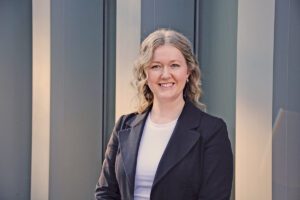
Courtesy of Ashley Hall
Ashley Hall (Democrat)
“Too many people who work in Ann Arbor can’t afford to live here, and that threatens the diversity and vibrancy that makes this city special,” writes Hall in an email to the Observer. Hall aims to address this by “implementing the Comprehensive Land Use Plan thoughtfully,” enacting a Tenants Bill of Rights, and investing in public transportation. She also pledges to expand upon the work being done with the city’s A2Zero climate plan, calling for climate resiliency in infrastructure projects. A supporter of the SEU, she currently serves as the director of board operations for Washtenaw County.
Read Ashley Hall’s full interview here.
Endorsements: Mayor Christopher Taylor; City Councilmembers Erica Briggs, Jenn Cornell, Lisa Disch, Ayesha Ghazi Edwin, Jen Eyer, Jon Mallek, Travis Radina, and Chris Watson; County Commissioners Justin Hodge, Andy LaBarre, Crystal Lyte, Caroline Sanders, Katie Scott, and Annie Somerville; State Senator Sam Singh; State Representatives Noah Arbit, Albas Farhat, Jason Morgan, Penelope Tsernoglou, and Stephen Wooden; AADL board president Aidan Sova. More endorsements here.
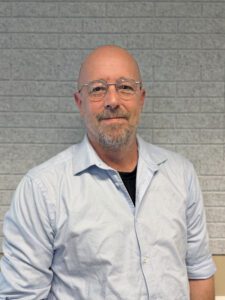
Courtesy of Kenneth Arthur Leicht Jr.
Kenneth Arthur Leicht Jr. (Independent)
Leicht is a self-described “independent outsider” running on a platform of fiscal responsibility, with a particular focus on transportation and the intersection of mobility, safety, convenience, and sustainability. He intends to rely on community involvement to formulate solutions. “I listen to the community and we form a plan together,” he emails the Observer.
Leicht acknowledges that he was arrested in 2013. The Hillsdale Daily News reports that he accepted a plea bargain that “dismissed four felony assault charges and a felony firearms charge in exchange for a no contest plea to two misdemeanors.” Leicht didn’t respond to a request to elaborate.
Read Kenneth Arthur Leicht Jr.’s full interview here.
WARD 4
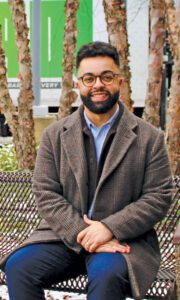
Lily Nazarian
Aidan Sova (Democrat)
“The most urgent challenges facing the Fourth Ward are the vulnerability of our aging infrastructure, need for more reliable public transit, and lack of affordable housing options,” emails Sova, a product lead at Google and president of the AADL Board. He intends to leverage his “exemplary record of fiscal oversight as Library Board President” as well as “existing partnerships with state leadership” to expand the housing supply through density and investment in all types of housing—including affordable, missing middle, land trust, condos—and to prioritize equitable resource distribution across the city. Sova writes, “I was raised in a low-income, single-parent household, so I understand firsthand what it feels like to worry about being left behind by rising costs.”
Read Aidan Sova’s full interview here.
Endorsements: Mayor Christopher Taylor; Lieutenant Governor Garlin Gilchrist II; City Councilmembers Dharma Akmon, Erica Briggs, Jenn Cornell, Lisa Disch, Ayesha Ghazi Edwin, Jen Eyer, Cynthia Harrison, Jon Mallek, Travis Radina, and Chris Watson; State Senators Mallory McMorrow and Sue Shink; State Representatives Jennifer Conlin, Morgan Foreman, Jason Hoskins, Jasper Martus, Jason Morgan, Amos O’Neal, Carrie Rheingans, and Jimmie Wilson Jr.; Sheriff Alyshia Dyer; County Commissioners Justin Hodge, Andy LaBarre, Crystal Lyte, Katie Scott, and Annie Somerville; Iron Workers Local 25; Washtenaw County Skilled Building Trades Council. More endorsements here.
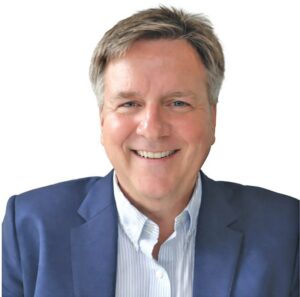
Ryan Kotyk
James Trost (Independent)
Trost, president of F-1 Visa Advisors, attributes the rising costs of housing to increasing property taxes, growing demand, and dwindling supply. He aims to address housing affordability by expanding Homestead Property Tax Credits for seniors, while balancing growth to ensure necessary infrastructure upgrades don’t drive up taxes. “My role on Council will be to oversee the costs associated with growth, and make sure that those that benefit the most, the developers, do not shift financial burdens to the residents,” he writes. Finally, he hopes to ease traffic congestion, applauding employers who offer the option of remote work and stating that “while increased options for mass transit and hopeful options like increased bike lanes are designed to lower car traffic on our streets, that’s not what’s happening.”
Read James Trost’s full interview here.
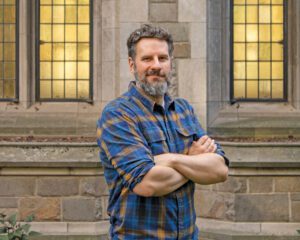
David Zeglen for the People
Dave Zeglen (Democratic Socialist)
“Too many residents’ voices were left out of the comprehensive land use plan process, and many others were not even aware of the proposed changes in the first place,” emails Zeglen, a U-M lecturer. He calls for “a process of democratizing density,” adding that “I will protect our publicly owned properties instead of selling them to private developers, and ensure public money goes toward public housing, cooperatives, or land trusts, rather than private developments.” He supports the Ann Arbor Tenants Union’s Tenant Bill of Rights, is exploring the feasibility of a vacancy tax on landlords, and calls for enforcement of Airbnb restrictions. He supports municipalization of the grid and pledges to support labor unions, fighting “for all city workers to get the prevailing wages and fair benefits they deserve.”
Read Dave Zeglen’s full interview here.
Endorsements: Washtenaw County Commissioner Yousef Rabhi, State Representative Dylan Wegela, Ann Arbor Education Association, Ann Arbor Tenants Union, Democratic Socialists of America, Michigan Democratic Party Progressive Caucus, Graduate Employees’ Organization, Human Rights Party at U-M, Huron Valley Area Labor Federation, Huron Valley DSA, State Teamsters Local 243, YDL board president Kristy Cooper. More endorsements here.
WARD 5
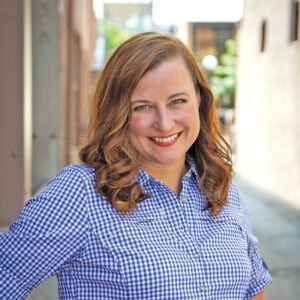
Courtesy of Jenn Cornell
Jenn Cornell (Incumbent; Democrat)
“I have experience as someone who could not afford to live here until I was in my 40s, despite having worked here in key roles since my mid-20s,” writes Cornell in an email to the Observer. The executive director of the Ann Arbor Art Center, Cornell is seeking a second term to continue fighting for housing affordability with a “gentle density” approach and a focus on developing TC-1 areas. “I strongly support meeting people where they are and want to be; high rises work for some, rentals work for some, some want more options like the ones we have in Ward 5 that offer duplexes, townhomes, triplexes in our neighborhoods,” she writes. She also prioritizes infrastructure, with a focus on implementing Vision Zero for road safety; she references her track record of advocating for speed reduction on Miller Ave., installing pedestrian islands on Jackson Rd., and voting in favor of budget allocations for transportation infrastructure. “I will continue to advocate for marijuana excise tax dollars going to substance use disorder support and other wraparound services for vulnerable populations,” she writes.
Read Jen Cornell’s full interview here.
Endorsements: Mayor Christopher Taylor; City Councilmembers Dharma Akmon, Erica Briggs, Lisa Disch, Ayesha Ghazi Edwin, Jen Eyer, Cynthia Harrison, Jon Mallek, Travis Radina, and Chris Watson; County Commissioners Andy LaBarre and Katie Scott; State Representative Jason Morgan; LGBTQ+ Victory Fund. More endorsements here.
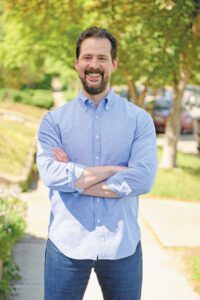
Nikita Artinian
Greg Monroe (Challenger; Democrat)
Monroe, a product manager in technology, writes that he has “no long term professional political aspirations,” but that he was inspired to run for office after participating in civic discourse around the CLUP. “I will push back on designating existing residential neighborhoods as Transition zones,” he vows, and suggests anti-speculation tools, land trusts, co-ops, and social housing as ways to increase affordable housing. He also supports tax relief for seniors who want to downsize to a smaller home. Finally, he aims to restore “the balance between the City and the University,” adding that “the University has increased its enrollment by 20% over the past decade without adding anywhere near enough housing to accommodate that growth, putting pressure on our housing market. The University also continues to acquire more land, which erodes the City’s tax base.”
Read Greg Monroe’s full interview here.
Dennis Burke (Challenger; Democrat)
Burke did not respond to interview requests and has no campaign website.
This article has been edited since it appeared in the June 2026 Observer. The year of the most recent Republican city councilmember was corrected.
The one article on your website that should be free…
I appreciate your concern. The article is temporarily paywalled, but it’ll be available for everyone starting on June 19 — leaving plenty of time to read it before the primary!
Worth mentioning you left out quite a few endorsements for Yousef Rabhi. He was endorsed by Bernie Sanders(!), Abdul El-Sayed, Ann Arbor Education Association, and UAW Region 1A, in addition to the ones you included.
Thank you, Ann Arbor Observer! I was LAZY at our last election and just asked a friend who she was voting for. WRONG! We are a primary and special election town so have to get off our duffs in JUNE and research the candidates and proposals. Reading these summaries and seeing a list of who is supporting each candidate is so helpful. Do your due diligence and don’t rely on a friend!! Democracy is local first and foremost.
I do not understand the misleading characterization of the Democratic candidates running in the August primary. You describes a “slate” of Democratic socialists, but all six of the people you characterize that way are Democrats running as Democrats in the Democratic Party primary. Three of them do belong to a Democratic Socialist organization but three do not. All too often Observer writers slant their articles to favor Mayor Taylor and the political machine through which he has controlled the city for a number of years, and this strikes me as just another example. Also, your article fails to make clear whether those who are labeled as Independents will be running in the August Democratic primary or only in the November general election.
“People who work in the city, can’t afford to live in the city”? Hmmmm, people who grew-up in the city, even those who live in the city now, won’t be able to afford living here in the future!