
Doug Coombe
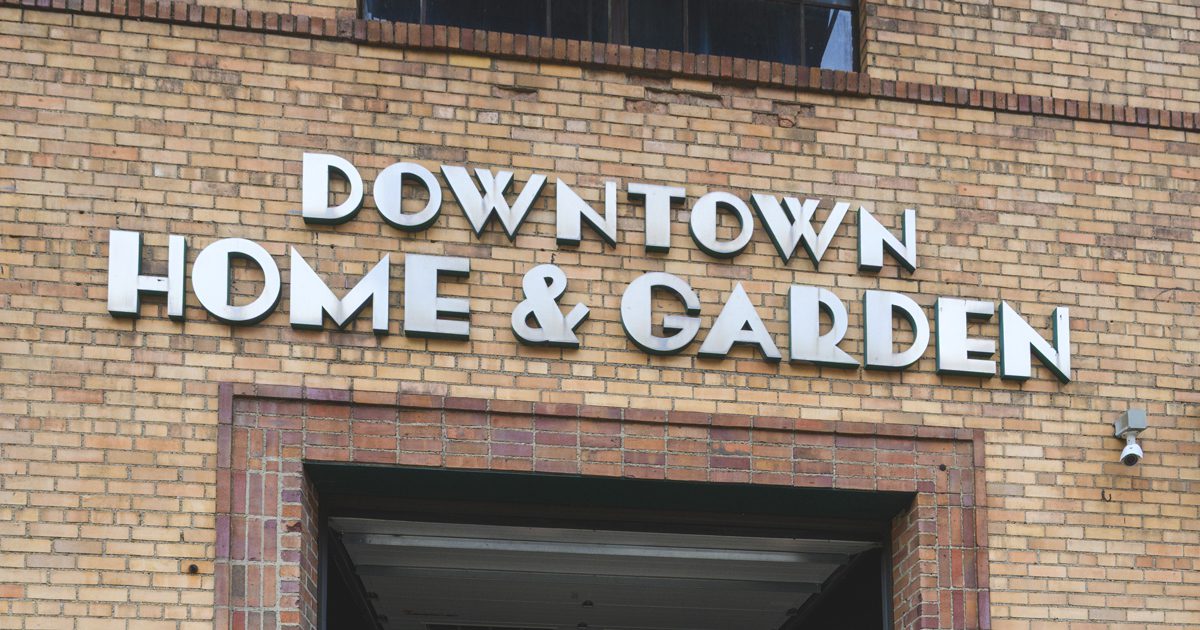
When the news broke last year that Downtown Home & Garden was closing, everywhere I went, people wanted to know: what will happen to the building?
For the past fifty years, my dad—Mark Hodesh—has owned the property at the corner of S. Ashley and Liberty. He sold the store to an employee in 2015 and “retired,” but has remained the landlord.
Eyes grew wide, voices dropped to a whisper. What’s it going to be? I could hear their fear. My line was simple: “It will be something good for the community.” But I did not know yet what that would be.
At last I can give you an answer. And I think I can say I was right all along.
When my father bought the store, it was named Hertler Brothers for the family who had opened it as a farm store and horse livery in 1906. By 1975, the Hertler brothers were living in a nursing home. Herman was ninety-four and Gottlob was 102. Their little sister Emma—who was just eighty-nine—was running the place.
Three years before, my dad had opened the Fleetwood Diner, the all-night place across Liberty. He didn’t know it when he went to check out the store, but Emma had seen him cooking through the windows of the Fleetwood on her rides to work, and she had been ordering tomato soup to go on Wednesdays.
When my dad heard Hertler’s was for sale, he paid a visit to talk to Emma and find out her plans for the place. She and her nephew Georgie were in the office, and because older people sometimes speak more loudly than they mean to, he could hear her say, “Sell it to him, Georgie. He’s a good boy. He gets up early.”
“And that was it,” my dad recalls. “The whole deal! Not even a handshake.”
Related: A Historic Tour of Hertler Brothers and Downtown Home & Garden (AADL, 2023)
A year into his ownership, business had ticked up. He got on board with the back-to-the-land movement and was the first in the area to sell organic gardening supplies. There was so much traffic in the drive-thru barn that he bought the parking lot on the corner—now Bill’s Beer Garden—and made a second exit so he could keep the line of cars moving.
That’s when he met my mom, Margaret Parker, an artist who lived in her studio on Ann St. Her artistic dreams and adventurous spirit took them to New York, where I was born, and eventually to Maine, where they ran the Castine Inn, a bed and breakfast, until I was thirteen.
During those years, my dad rented the store out, first to Raupp Campfitters, and then to John McGovern, who ran it as Hertler Brothers. But by 1997, the store was struggling. My grandfather had died the previous year, and now my grandma was living alone. My parents were thrilled to sell the inn and move home. My father would reopen the store as Downtown Home & Garden.
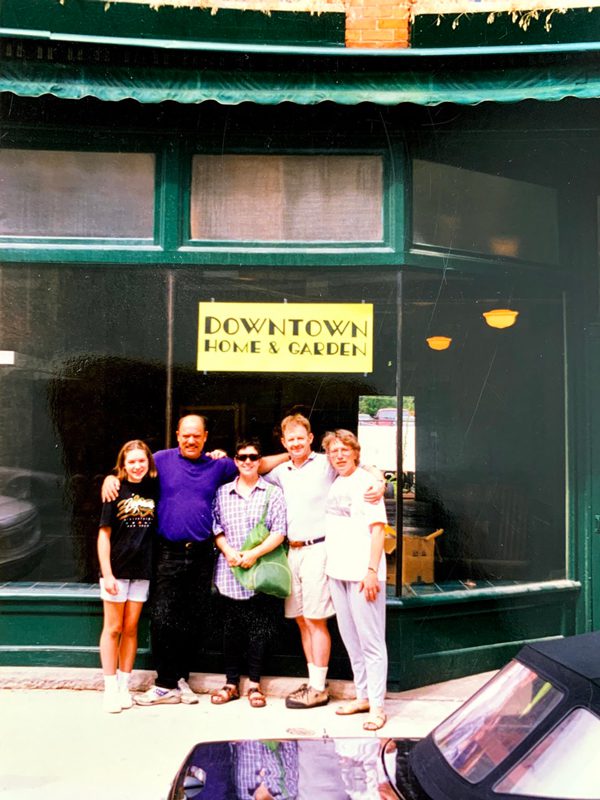
(From left) Jeanne Hodesh, Mark Hodesh, Kathy Hall, Bill Zolkowski, and Margaret Parker on Downtown Home & Garden’s opening day, 1997. Courtesy of Jeanne Hodesh
On that first day, in August 1997, the only item my dad had for sale was birdseed. I feared we would go broke.
While my dad filled in the shelves of the store, my mom transformed a stockroom upstairs into her studio. When I was fourteen, I reluctantly took my dad up on the offer of a job at the store. I worked in the “bread box” after school, receiving orders of loaves from Zingerman’s and wiping down the counters before closing. Once I proved myself capable, I worked the cash register on Saturday mornings. When spring hit, I raced to keep up.
Housewares and garden supplies don’t make sense to a teenager. It never occurs to you that someone planted the daffodil bulbs that sprout up in spring, that hoses and rakes and shovels—all that mysterious equipment that crowds a garage—need replacing from time to time. I had no idea what people loved about Downtown Home & Garden.
-

- Artwork by Margaret Parker
I went to college on the east coast, then moved to Brooklyn. Every few months, my dad would send me a copy of the store’s latest newsletter. My mother designed the iconic covers and layout; he wrote the copy. By then, I had started writing for magazines, covering the local food movement. Now the appeal of Henckels knives, Le Creuset pots, and Ohio Stoneware pottery made sense to me.
On Sundays I’d call my parents and hear about the store. They’d held a homemade pickle tasting! There was going to be a petting zoo at Midnight Madness! Each fall, customers were invited to bring in the best jar of jam they’d made from that season’s harvest for the annual jam competition and public tasting. When my dad traded a Buddha garden statue to a customer for her 1936 Magic Chef stove, he began cooking borscht in the back of the store to serve to customers at the annual Polish pottery sale.
In New York I reported on the opening of farm-to-table restaurants and interviewed a new generation of young organic farmers. At home, my mom designed a cover for the newsletter titled “City Chickens,” to celebrate the new city ordinance that allowed residents to keep backyard birds. Even though I’d moved away, it was becoming more and more clear to me that I was, in fact, cut from the same cloth as my parents.
I was twenty-seven when my dad asked me if I wanted to run the store someday. I didn’t hesitate when I told him “no.” I wanted to be a writer.
Even so, I had fallen in love with the store like everyone else by then. When I came home from New York to visit, I’d return to the city with treasures from Downtown Home & Garden. I had begun to see the store the way my father’s customers did: a trusted place to find water glasses, linen napkins, wooden spoons—all perfect in their simplicity. As the years went on, it dawned on me: if I lived closer, I could fill my entire apartment with items from my dad’s store.
-
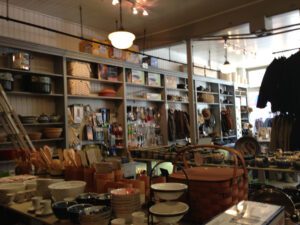
- Courtesy of Jeanne Hodesh
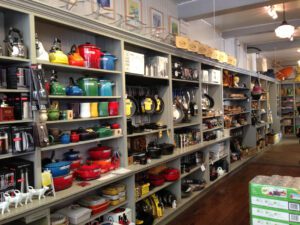
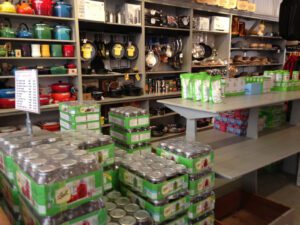
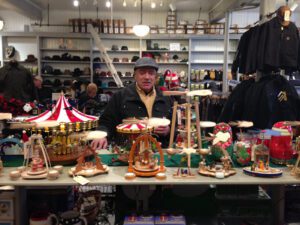
Like many kids who grow up in Ann Arbor and move away, by the time I was in my mid-thirties, I was ready to move back. The pandemic was the final push that got me here. Since then, my life has taken turns I never could have predicted. A few months after I arrived, I met Donald, who I would go on to marry. A year later, my mom was diagnosed with a brain tumor. Two years after that, we had a baby. Then, in August 2025, it was announced that the store was closing.
In the weeks that followed, my dad’s phone rang with calls from developers and real estate agents. People were quick to offer their ideas. It should be a grocery store, a music venue, a gallery. Why not a nonprofit art space, a new incarnation of Treasure Mart, a home for a magnificent model train?
“Not condos. Not a bar. Not a restaurant,” my dad promised.
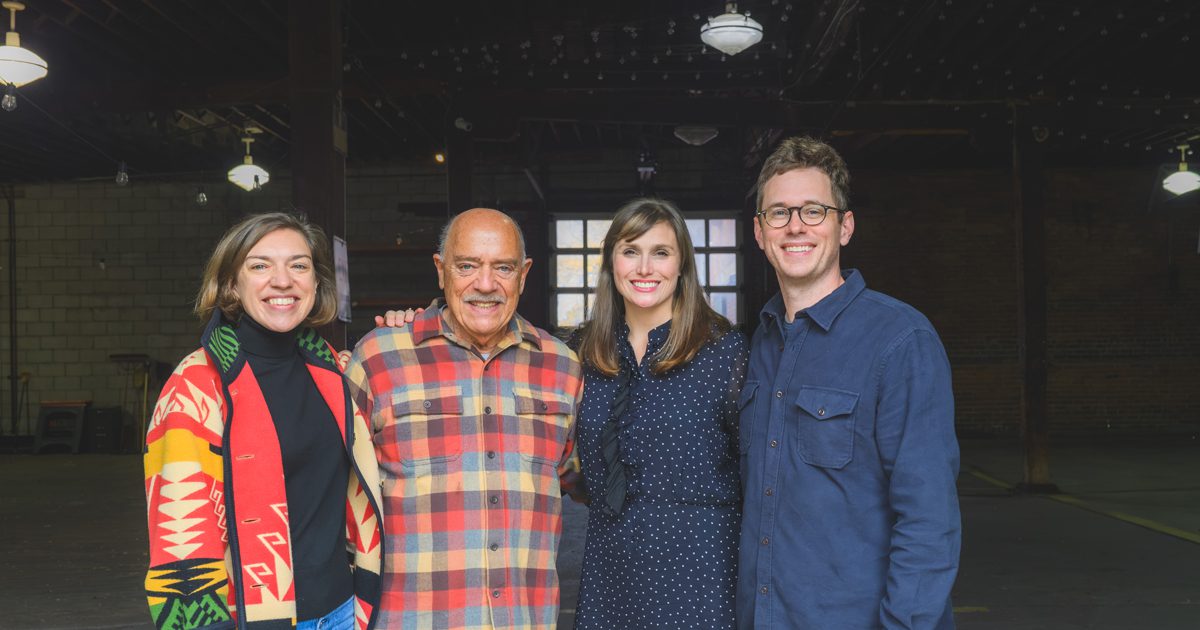
(From left) Jeanne Hodesh, retired Downtown Home & Garden owner Mark Hodesh, and Literati owners Hilary and Mike Gustafson. The Gustafsons will lease the historic property at 210 S. Ashley. | Doug Coombe
Last year for Halloween, I dressed up my little family as coconut trees covered in the letters of the alphabet. We headed down to Literati to take part in their annual literary costume contest. “Here comes Chicka Chicka Boom Boom!” called a bookseller as we were swept in the door on a cloud of excitement. Afterward, I sent an email to Hilary Gustafson (who runs the bookstore with her husband Mike), thanking them for hosting the event.
It reminded me of the jam contest my dad used to hold at the store each fall. He loved orchestrating the convivial chaos, and giving a special experience to the community who gave him purpose in the work he did every day.
“You and Mike are carrying on that tradition now,” I wrote, “in every detail that makes Literati a destination. I am so glad the character of downtown is in your capable hands. Thank you for keeping Ann Arbor lively, joyful, and real.”
I had no idea then that a year later, they would be signing a lease with my dad.
This holiday season, Literati will host a pop-up in their new space. Alongside the bookstore’s expertly curated selection of titles, customers will be able to buy amaryllis bulbs selected by my dad. In the months that follow, they’ll build out the space to make it their own. Stay tuned for news of Literati’s move to 210 S. Ashley in 2027.
“I’m proud to pass it off to Mike and Hilary,” my dad says. “Emma Hertler would be too. I can rest easy, and Literati is going to thrive.”
One afternoon some months ago, I was catching up with my dad in our kitchen. He was just back from lunch with an old friend who owns various commercial properties around town. His son now runs the family business. I mentioned that there are still times when I wish I had been cut out that way. “His son got a degree in real estate law,” my dad shrugged. “We’re storytellers.”
This is the best ending to my family’s chapter at 210 S. Ashley that I could imagine.