
Tabi Walters
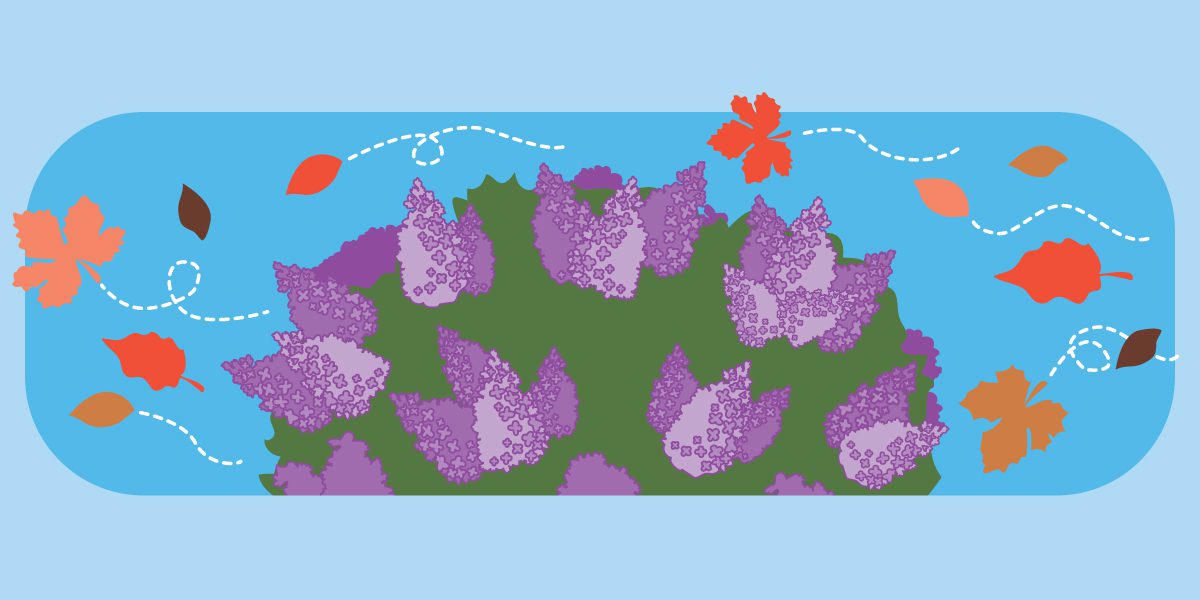
Colorful trees are a typical autumn sight, but in mid-October, Northside resident Janet Chen saw a surprising shade: pale purple. The lilac in her backyard was in bloom.
In an informal survey, the Observer learned of spring bloomers sporting fall flowers across Washtenaw County: grape hyacinths near Allmendinger Park, a rhododendron near Angell Elementary, forsythia near North Campus, and lilacs from Lower Burns Park and Bryant Pattengill East to Lodi Twp., Ypsilanti, and Saline.
This phenomenon, known as remontancy, is normal for many plants: certain types of roses, hydrangeas, lilies, and irises, for example. But what does it mean when spring-blooming plants flower again in the fall?
“Frequently in these situations it’s a response to some sort of environmental stress or conditions that are a little bit abnormal,” says Doug Conley, horticulture lead at Matthaei Botanical Gardens—who has a magnolia in his yard currently in bloom.
Stressors may include abnormal heat, drought, or soil conditions such as nitrogen deficiency or increased salt content. And Conley explains that when fall conditions, including day length, temperature, and moisture, are similar to spring, it can “trick” a plant into blooming.
Conley speculates that climate change could play an indirect role. Data from GLISA, a climate research partnership, shows rising precipitation and more frequent high-precipitation storms in Ann Arbor in recent decades. And for over half of the past year, federal data shows, 50 to 100 percent of Washtenaw County has experienced abnormally dry soil.
“These extreme heat events, the drought events, wet, cold, any kind of things that trigger flowering … are being affected by climate change,” Conley says.
Plants that are susceptible to remontancy set their buds in summer, Conley says, and a bud that flowers in fall won’t flower again the following spring.
“Flowering and then seed production are energy-intensive for plants, right?” he adds. “So blooming out of season could impact the health of that plant the following season.”
But according to a 2016 article in the Journal of Experimental Botany, some plants in remontancy still develop fertile seeds, with the third generation also developing normally. And U-M evolutionary biology professor Liz Tibbetts shares another possible benefit: “I imagine that increased nectar and pollen availability during warm fall weather is great for pollinator health and overwinter survival.”